
Nutrition & Safety
Can Cats Eat Cherries? The Answer May Surprise You
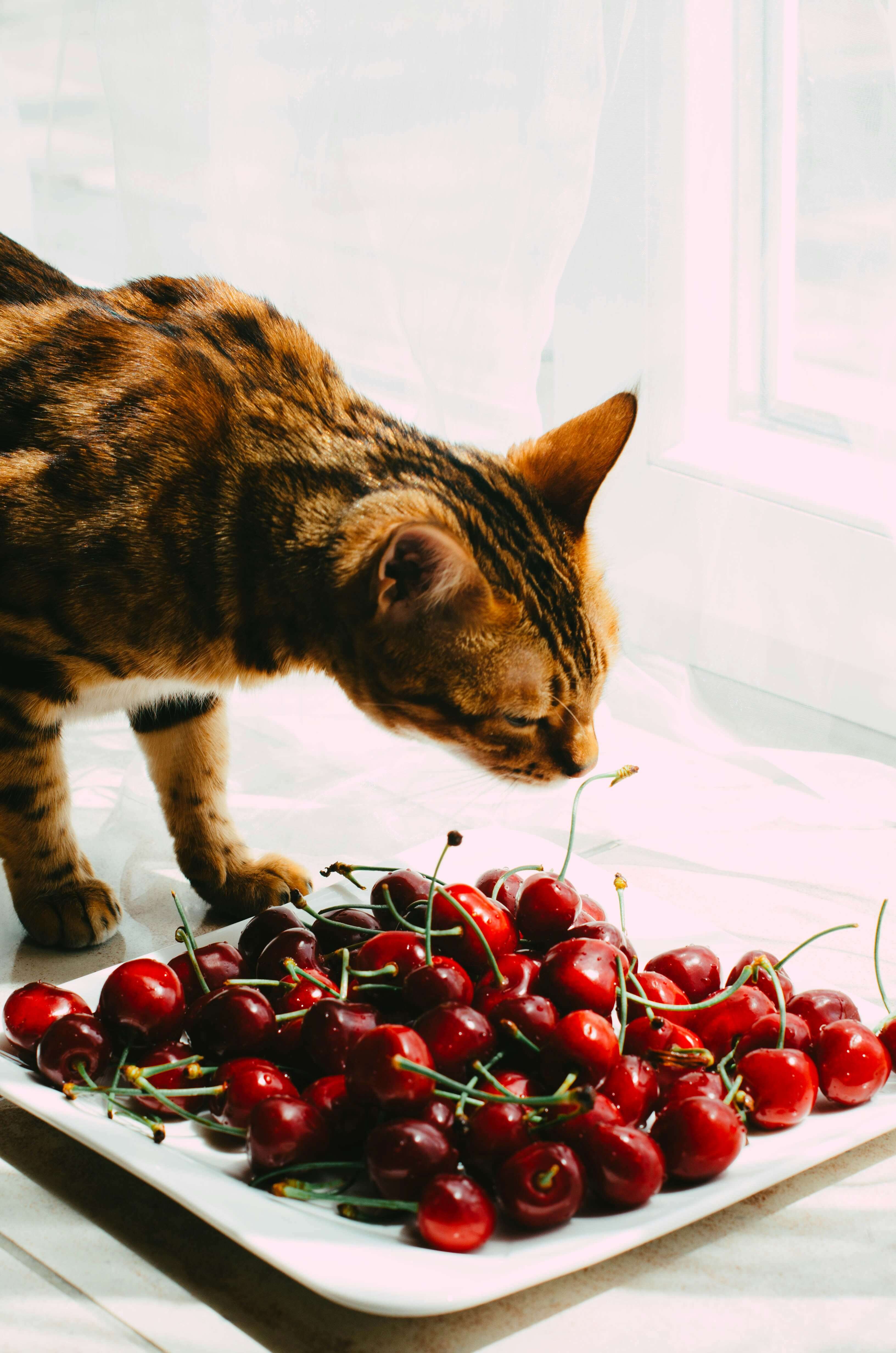
You’re enjoying a bowl of fresh cherries. Your cat hops onto the counter, sniffs the air, and gives you that look—the one that says, “Can I have some?”
Before you share, here’s what you need to know.
The short answer: No, cats should not eat cherries. While cherries are a healthy snack for humans, they contain compounds that are toxic to cats. Even a small amount can cause serious health problems.
Let’s break down why cherries are dangerous, what symptoms to watch for, and what to do if your cat eats one.
Why Are Cherries Toxic to Cats?
Cherries—along with apricots, peaches, and plums—belong to the Prunus family. These fruits contain a compound called amygdalin, which turns into cyanide when chewed or digested.
Cyanide interferes with your cat’s ability to carry oxygen in the blood. In simple terms: it stops their cells from using oxygen properly.
Which Parts of the Cherry Are Dangerous?
| Part | Toxicity Level |
|---|---|
| Pit (stone) | High — contains the highest concentration of amygdalin |
| Stem and leaves | High — also contain cyanogenic compounds |
| Flesh (fruit) | Low to moderate — flesh has very little amygdalin, but still not recommended |
Even if you remove the pit, the flesh can still cause digestive upset. And for most cats, the sugar content alone is enough to cause stomach issues.
What Happens If a Cat Eats a Cherry?
Symptoms usually appear within 15 to 30 minutes of ingestion, though they can take up to a few hours.
Mild Symptoms (Usually from Eating the Flesh)
- Drooling or foaming at the mouth
- Mild stomach upset (vomiting, diarrhea)
- Loss of appetite
Severe Symptoms (Usually from Eating the Pit, Stem, or Leaves)
- Dilated pupils
- Difficulty breathing or rapid breathing
- Bright red gums (a sign of oxygen deprivation)
- Panting or gasping
- Weakness or lethargy
- Shock or collapse
Emergency: If you see any severe symptoms—especially breathing difficulty or collapse—contact your veterinarian or an emergency animal hospital immediately.
What to Do If Your Cat Eats a Cherry
- Stay calm. Panicking won’t help your cat, but quick action will.
- Identify what was eaten. Did your cat eat just the flesh, or the pit, stem, or leaves? The pit is the most dangerous part.
- Estimate how much. One cherry pit is unlikely to be fatal for a healthy adult cat, but multiple pits increase the risk.
- Call your veterinarian. Even if your cat seems fine, describe what was eaten. Your vet can tell you whether to monitor at home or come in.
- Do NOT induce vomiting unless instructed by a vet. Only do this if a veterinarian explicitly tells you to.
What About Cherry-Flavored Foods?
Cherry-flavored treats usually don’t contain real cherry pits, but come with other risks:
- Sugar and artificial sweeteners — xylitol is highly toxic to cats.
- Dairy — many cats are lactose intolerant.
- Preservatives and additives — unnecessary for your cat’s diet.
Even if it’s “cherry-flavored,” it’s best to avoid sharing.
Safe Alternatives to Cherries
If your cat enjoys the occasional fruity treat, here are safer options (no more than 10% of daily calories).
| Safe Fruit | Notes |
|---|---|
| Blueberries | Small, low in sugar, high in antioxidants |
| Strawberries | Remove the green tops; offer in small pieces |
| Watermelon | Seedless only; remove the rind |
| Cantaloupe | Many cats love it; offer small, bite-sized pieces |
| Banana | High in sugar; a thin slice is plenty |
Always wash fruit thoroughly, remove seeds, pits, or rinds, and offer only a tiny amount to see how your cat reacts.
The Bottom Line
Cats should not eat cherries. The pits, stems, and leaves contain cyanide-producing compounds that are toxic to cats. Even the flesh can cause digestive upset.
If your cat steals a cherry:
- Stay calm and assess what part they ate
- Call your veterinarian for guidance
- Watch for symptoms like drooling, dilated pupils, or difficulty breathing
When in doubt, stick to cat-safe treats. Your indoor cat will be just as happy with a piece of cooked chicken or a few blueberries—without the risk.
Sources
- ASPCA Animal Poison Control Center. Cherry. https://www.aspca.org/pet-care/aspca-poison-control/toxic-and-non-toxic-plants/cherry
- MSD Veterinary Manual. Houseplants and Ornamentals Toxic to Animals. https://www.msdvetmanual.com/toxicology/poisonous-plants/houseplants-and-ornamentals-toxic-to-animals
- Milewski LM, Khan SA. An overview of potentially life-threatening poisonous plants in dogs and cats. Journal of Veterinary Emergency and Critical Care. 2006;16(1):25-33.
This article is for informational purposes only and is not a substitute for professional veterinary advice. If you suspect your cat has eaten something toxic, contact your veterinarian or an emergency animal hospital immediately.