
Discover
Discover Cats: Fun Facts, Breeds & Surprising Truths
Fun facts and little-known trivia — because there is always something new to love about felines.
Fun Facts
Eight quick things you might not know about cats.
Vocal sounds
Cats use around 26 distinct vocalizations with humans — far more than most mammals.
Daily sleep
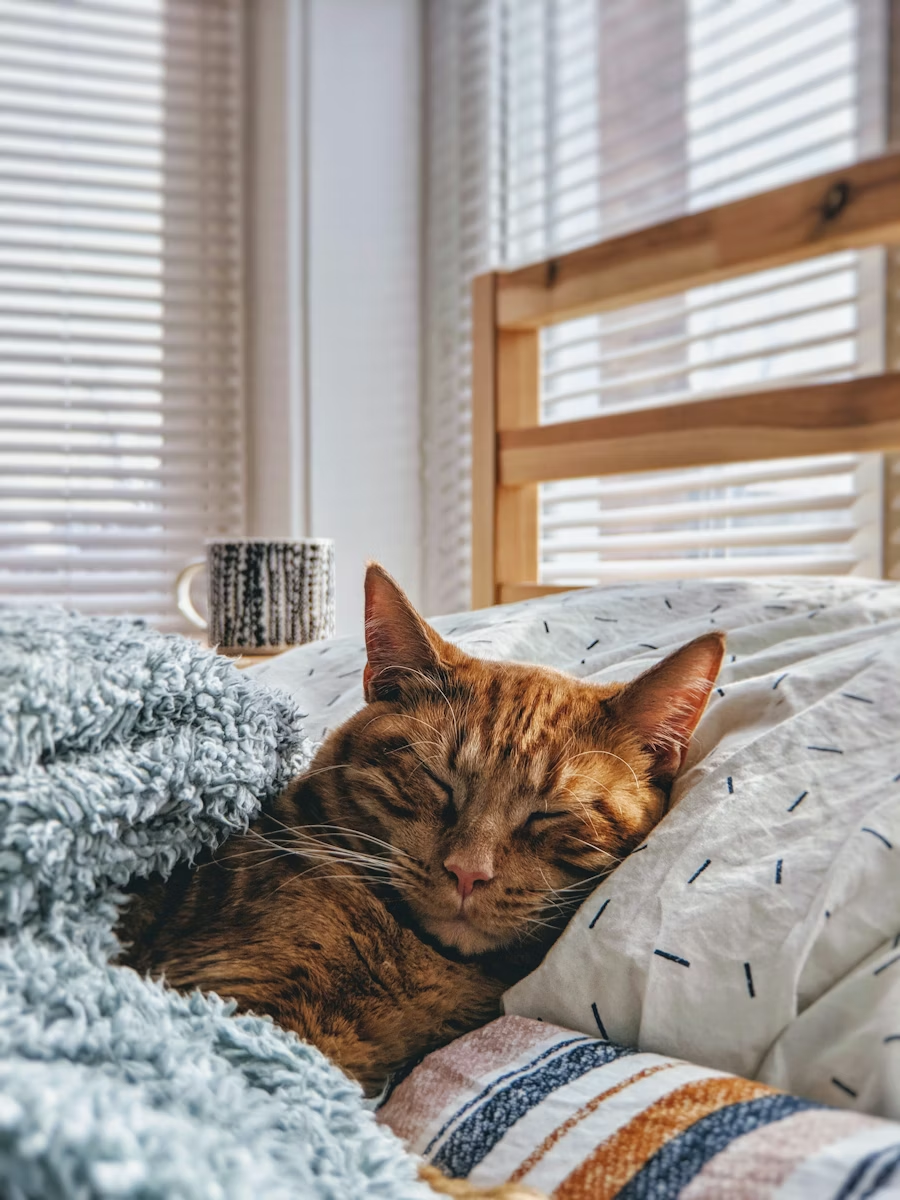
The average cat sleeps 12–16 hours a day, conserving energy for bursts of activity.
Jumping height
A cat can leap up to five times its own height in a single bound.
Field of vision
Cats have a 200–230° visual field, helping them spot movement at the edge of a room.
Smell sensitivity
A cat's sense of smell is roughly 1,000 times more sensitive than a human's.
Purr frequency (Hz)
Cat purrs vibrate between 25–50 Hz — a range linked to bone healing and stress relief.
Ear muscles
Cats have 32 muscles in each ear, allowing them to rotate independently up to 180°.
Top speed
A domestic cat can sprint at up to 48 km/h — faster than the average human runner.


Did You Know?
Small facts that change how you see your cat every day.
Cats slow-blink to say “I trust you”
A slow, deliberate blink is a cat's way of showing affection. Blink back slowly and they often return the gesture.
Their nose print is unique
Just like a human fingerprint, every cat's nose has a unique pattern of ridges and bumps.
Cats can hear ultrasound
Cats detect frequencies up to 79 kHz — higher than dogs — originally to locate high-pitched rodent calls.
Indoor cats live almost twice as long
The average outdoor cat lives 2–5 years. Indoor cats regularly reach 15–20 years with proper care.
Cats dislike still water instinctively
In the wild, still water was more likely to be contaminated. Many cats prefer running water — a fountain can significantly increase their daily intake.
Cats dream just like humans
During REM sleep, cats show eye movement and twitching — signs they are processing memories and experiences, much like we do.
Meowing is mostly for humans
Adult cats rarely meow at each other. The meow evolved specifically as a communication tool directed at people.
Cats eat grass to aid digestion
Grass acts as a natural emetic, helping cats expel indigestible material. Indoor cats benefit from a small pot of cat grass.
Explore More
More guides from CatInApt for curious apartment cat parents.
Common Cat Symptoms
Browse apartment-friendly health guides covering dental care, exercise, weight, and everyday warning signs.
Cat Breeds A-Z
Explore breed profiles suited to indoor living, from calm British Shorthairs to social Siamese companions.
Cat Behavior Explained
Learn play routines, scratching habits, and common indoor behavior puzzles for small-space living.
What Can Cats Eat?
Check safe snacks, kibble tips, and dry vs wet feeding guides made for apartment cat owners.