
Nutrition & Safety
Can Cats Eat Cherries? The Answer May Surprise You
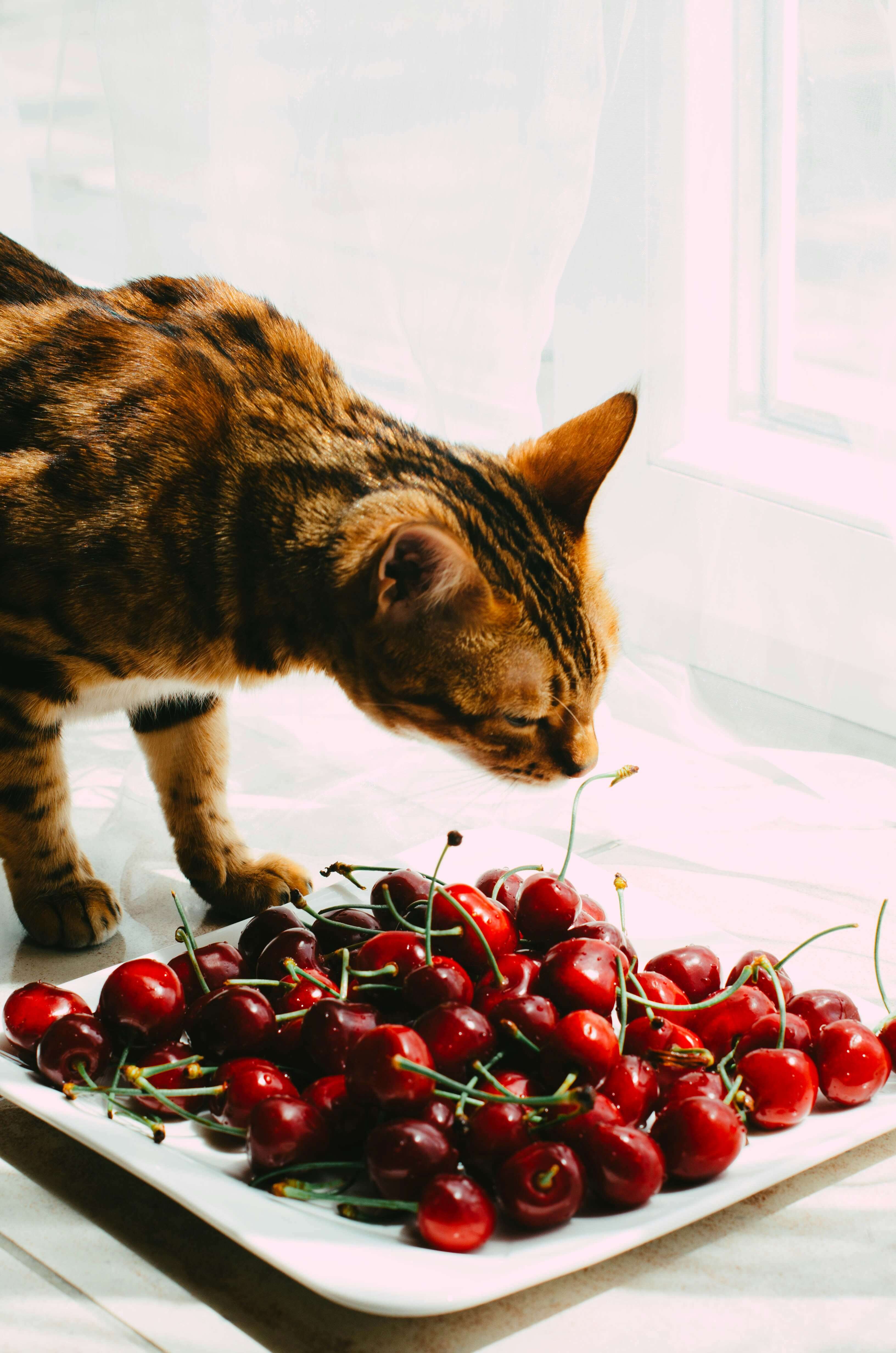
You’re enjoying a bowl of fresh cherries. Your cat hops onto the counter, sniffs the air, and gives you that look—the one that says, “Can I have some?”
If you’ve ever wondered can cats eat cherries, you’re not alone. It’s one of the most common cat fruit toxicity questions apartment owners ask. Fruit bowls on coffee tables and windowsills put cherries within easy reach of curious paws.
Before you share anything, here’s what matters. Cherries are not safe indoor cat treats. Pits, stems, and leaves can cause cyanide poisoning. Even the flesh can trigger vomiting or diarrhea.
The short answer: No, cats should not eat cherries. Cherries are a healthy human snack, but they carry real toxicity risks for cats. Even a small bite can lead to serious illness.
Below, we break down why cherries are dangerous. We cover symptoms, emergency steps, and safer snack swaps. For the full picture on safe and toxic fruits, read our pillar guide on can cats eat fruit.
Why Are Cherries Toxic to Cats?
Cherries—along with apricots, peaches, and plums—belong to the Prunus family. These fruits contain a compound called amygdalin.
When a cat chews or digests amygdalin, it can turn into cyanide. That makes cherries a serious cat fruit toxicity risk—not a harmless snack.
Cyanide interferes with your cat’s ability to carry oxygen in the blood. In simple terms, it stops their cells from using oxygen properly. That is how cyanide poisoning develops.
Which Parts of the Cherry Are Dangerous?
| Part | Toxicity Level |
|---|---|
| Pit (stone) | High — contains the highest concentration of amygdalin |
| Stem and leaves | High — also contain cyanogenic compounds |
| Flesh (fruit) | Low to moderate — flesh has very little amygdalin, but still not recommended |
Even if you remove the pit, the flesh can still cause digestive upset. For most cats, the sugar content alone is enough to trigger stomach issues.
A common misconception: removing the pit makes cherries safe
Many cat owners assume that pit-free cherry flesh is completely safe to share. That is not true.
Cherry flesh is high in sugar. It offers no real nutritional benefit for cats. It should not be used as an indoor cat treat—even in tiny amounts.
A small bite may cause vomiting or diarrhea in sensitive cats. That alone is reason enough to skip it.
The pit remains the most dangerous part. If your cat bites or crushes a pit, even a small fragment can release cyanogenic glycosides (amygdalin).
That exposure can lead to cyanide poisoning. Indoor apartment cats often weigh less than outdoor cats, so the same dose carries a higher relative risk. When in doubt, keep all cherry parts away from your cat.
What Happens If a Cat Eats a Cherry?
Symptoms usually appear within 15 to 30 minutes of ingestion, though they can take up to a few hours.
Mild Symptoms (Usually from Eating the Flesh)
- Drooling or foaming at the mouth
- Mild stomach upset (vomiting, diarrhea)
- Loss of appetite
Severe Symptoms (Usually from Eating the Pit, Stem, or Leaves)
- Dilated pupils
- Difficulty breathing or rapid breathing
- Bright red gums (a sign of oxygen deprivation)
- Panting or gasping
- Weakness or lethargy
- Shock or collapse
Emergency: If you see any severe symptoms—especially breathing difficulty or collapse—contact your veterinarian or an emergency animal hospital immediately.
What to Do If Your Cat Eats a Cherry
- Stay calm. Panicking won’t help your cat, but quick action will.
- Identify what was eaten. Did your cat eat just the flesh, or the pit, stem, or leaves? The pit is the most dangerous part.
- Estimate how much. One cherry pit is unlikely to be fatal for a healthy adult cat, but multiple pits increase the risk.
- Call your veterinarian. Even if your cat seems fine, describe what was eaten. Your vet can tell you whether to monitor at home or come in.
- Do NOT induce vomiting unless instructed by a vet. Only do this if a veterinarian explicitly tells you to.
What About Cherry-Flavored Foods?
Cherry-flavored treats usually don’t contain real cherry pits, but come with other risks:
- Sugar and artificial sweeteners — xylitol is highly toxic to cats.
- Dairy — many cats are lactose intolerant.
- Preservatives and additives — unnecessary for your cat’s diet.
Even if it’s “cherry-flavored,” it’s best to avoid sharing.
Safe Alternatives to Cherries
Cherries do not belong on your cat’s treat list. If your cat enjoys an occasional fruity snack, choose safer options instead.
Keep portions tiny—no more than 10% of daily calories. These are better indoor cat treats than any cherry product:
| Safe Fruit | Notes |
|---|---|
| Blueberries | Small, low in sugar, high in antioxidants |
| Strawberries | Remove the green tops; offer in small pieces |
| Watermelon | Seedless only; remove the rind |
| Cantaloupe | Many cats love it; offer small, bite-sized pieces |
| Banana | High in sugar; a thin slice is plenty |
Always wash fruit thoroughly, remove seeds, pits, or rinds, and offer only a tiny amount to see how your cat reacts. For a full overview of safe and toxic fruits, see our guide on can cats eat fruit.
Kitchen Safety Tips for Indoor Cats in Apartments
In a studio or small apartment, the kitchen and living area often share the same space. Fruit bowls, cutting boards, and open trash bins sit within easy reach of a curious indoor cat.
A few habits go a long way toward preventing accidental cat fruit toxicity at home.
What apartment cat owners should watch out for
Many apartment households keep fruit bowls on coffee tables or windowsills. Both are easy jump targets for curious cats.
Even if you never feed cherries on purpose, dropped flesh or a pit on the floor can still poison your cat. Small apartments mean less storage space. Fruit scraps, pits, and stems often sit in open bins where cats can reach them.

- Discard pits immediately after eating. Do not leave cherry pits on plates, counters, or side tables—toss them right away.
- Never use an open trash can for cherry waste. Use a lidded bin your cat cannot paw open; bag pits and stems before throwing them out.
- Check low surfaces after snack time. Scan under coffee tables and window ledges for dropped fruit your cat could sniff or chew.
- Keep cherries off the counter. Store fruit in a closed container or fridge, not in an open bowl your cat can jump onto.
- Dispose of pits and stems promptly. Do not leave cherry pits in an open trash can or on a plate; bag them and seal the bin when you can.
- Rinse surfaces after prep. Wipe juice and scraps from counters and tables so your cat cannot lick leftover residue.
- Supervise snack time. If you eat cherries on the sofa or desk, keep your cat at a safe distance until pits and stems are cleared away.
These small living-space habits help protect apartment cats from accidental cherry exposure. They also reduce other kitchen hazards common in compact homes.
FAQ
What should I do if my apartment cat ate a cherry pit?
Call your veterinarian immediately. Do not wait to see if symptoms appear.
Tell them whether the pit was whole or chewed, how many your cat may have eaten, and when it happened. Watch closely for drooling, dilated pupils, difficulty breathing, bright red gums, weakness, or collapse.
Do not induce vomiting unless your vet explicitly instructs you to. In a small apartment, keep your cat in one quiet room while you call so you can monitor them easily.
Can a tiny piece of cherry flesh hurt my indoor cat?
A small lick or bite of cherry flesh alone is unlikely to cause cyanide poisoning. But it is still not safe.
The flesh is high in sugar. It can cause vomiting, diarrhea, or loss of appetite—especially in indoor cats with sensitive stomachs. It offers no nutritional benefit and should not be treated as a harmless indoor cat treat.
Repeated small amounts add unnecessary sugar load. Skip cherry flesh entirely. Choose cat-safe alternatives like blueberries instead.
Are cherry stems and leaves toxic to cats?
Yes. Cherry stems and leaves contain cyanogenic compounds, just like the pit.
If your cat chews a stem left on the counter, sniffs a bowl of cherries with stems attached, or licks residue from a cutting board, treat it as a potential exposure.
Stems and leaves are easy to overlook in small apartments where prep surfaces double as dining tables. Bag stems with pits immediately, wipe counters after prep, and call your vet if you think your cat ingested any part.
Can cats eat dried cherries or maraschino cherries?
No. Dried cherries are concentrated in sugar and may still contain pit fragments or stems.
Maraschino cherries are soaked in syrup. They often contain added sugar, preservatives, or artificial coloring—none of which belong in a cat’s diet.
Cherry juice and cherry-flavored yogurt or treats carry similar risks. If you want a fruity indoor cat treat, choose plain, cat-safe options like blueberries or a small piece of seedless watermelon instead.
How soon do cherry poisoning symptoms appear in cats?
Symptoms often start within 15 to 30 minutes after a cat eats a pit, stem, or leaves. They can take up to a few hours in some cases.
Mild signs include drooling, vomiting, diarrhea, and loss of appetite. Severe signs—especially from chewed pits—include dilated pupils, difficulty breathing, bright red gums, weakness, and collapse.
Do not wait for symptoms to call your vet. If you know or suspect your apartment cat ate a toxic part, contact them right away.
The Bottom Line
Can cats eat cherries? No. The pits, stems, and leaves contain cyanide-producing compounds that are toxic to cats. Even the flesh can cause digestive upset.
If your cat steals a cherry:
- Stay calm and assess what part they ate
- Call your veterinarian for guidance
- Watch for signs of cyanide poisoning—drooling, dilated pupils, or difficulty breathing
When in doubt, stick to safer indoor cat treats. Your cat will be just as happy with cooked chicken or a few blueberries—without the risk.
Browse can cats eat fruit for more cat fruit toxicity guidance and safe snack ideas.
Sources
- ASPCA Animal Poison Control Center. Cherry. https://www.aspca.org/pet-care/aspca-poison-control/toxic-and-non-toxic-plants/cherry
- MSD Veterinary Manual. Houseplants and Ornamentals Toxic to Animals. https://www.msdvetmanual.com/toxicology/poisonous-plants/houseplants-and-ornamentals-toxic-to-animals
- Milewski LM, Khan SA. An overview of potentially life-threatening poisonous plants in dogs and cats. Journal of Veterinary Emergency and Critical Care. 2006;16(1):25-33.
This article is for informational purposes only and is not a substitute for professional veterinary advice. If you suspect your cat has eaten something toxic, contact your veterinarian or an emergency animal hospital immediately.